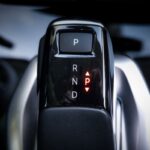
I just got my driver’s license after three years of trying. I did it in an automatic car – an option I did not know was available until I almost decided to give up on manual car lessons after repeatedly experiencing dizziness and overstimulation. If I had been limited to manual cars, I would hardly be able to drive.
Whenever I tell any European friends about my choice, they are very much surprised that the possibility of getting the license in an automatic car even exists. Meanwhile, while travelling to the USA, manual cars are nowhere to be seen. This leads me to one question: why does Europe keep on insisting on manual cars, while across the ocean automatic cars have been the standard for decades? It’s not just a matter of innovation, but of accessibility.
For those who enjoy mechanics or the act of driving itself, the clutch and the gears may be appealing. In fact, being able to choose exactly when to change gear gets the driver more mechanically involved in what the car is doing. However, most people do not see driving as a hobby but as a practical skill. A skill that sometimes is indispensable for day-to-day chores such as going to work, taking children to school, or moving items around. Considering that perspective, the core question should be not which type of car makes driving more engaging, but which one makes it safer, simpler and more accessible.
Automatic cars remove one of the most demanding parts of driving, which is constantly having to coordinate the clutch, accelerator and gear stick while simultaneously watching the road. Such removal allows drivers to concentrate on the parts of driving that actually determine safety, like following signs and traffic lights, checking mirrors, navigating junctions and paying attention to pedestrians and other vehicles. While many experienced drivers execute these actions almost unconsciously, learners can find them extremely difficult to manage in real time – especially those struggling with certain issues.
People who experience sensory overload, difficulties with coordination, anxiety, fatigue, or certain physical limitations may find an automatic car significantly easier to operate. The existence of automatic-only licences can be the difference between being able to drive independently and not driving at all.
There is sometimes an assumption that making driving easier somehow makes someone a less capable driver. But difficulty is not the same thing as competence. A person does not become safer behind the wheel simply because they have learned to operate a clutch. What matters most is awareness, anticipation, speed control and the ability to react calmly to unexpected situations. None of these requires a manual gearbox. On the contrary, the manual gearbox can hinder the process of collecting the information that really matters.
Automatic cars also make everyday driving less tiring. Stop-and-go traffic is one of the clearest examples. In a manual car, a traffic jam can mean hundreds of repeated clutch and gear movements. In an automatic, the driver can simply concentrate on controlling speed and maintaining distance. The difference may seem small on a ten-minute journey, but over years of commuting it can have a substantial effect on comfort and fatigue.
Furthermore, the argument for manual cars is getting weaker as car technology changes. Hybrid and electric vehicles tend to rely on automatic or single-speed transmissions. Electric motors do not require conventional gear changes in the same way combustion engines do, meaning that a large part of the automotive industry is already moving away from the traditional manual gearbox. Learning manual transmission may therefore become less useful with every new generation of cars.
There are, of course, advantages to knowing how to drive a manual. A manual licence gives a driver a wider choice of vehicles, which can still be useful when renting a car or buying a cheaper second-hand model in parts of Europe. The problem is not that manual cars exist. It is that in many European countries they are still treated culturally as the proper way to learn to drive, while automatic cars are sometimes regarded as a shortcut or a luxury. In the UK, for instance, 74% of practical driving tests in 2024-25 were still taken in manual cars, despite automatic cars currently dominating the market. For other countries often regarded as technologically progressive, like the Netherlands and Spain, recent data show that driving exams in automatic cars only represent 5% and 7.8% of the total, respectively. In Portugal, where it is mandatory to enroll in a driving school to get the license, driving schools that actually provide the option of learning in an automatic car are rare.
Perhaps Europe has held on to manual cars partly because of habit. For decades, they were cheaper, more fuel-efficient and far more common on European roads. Those advantages made learning manual perfectly rational. But technology has changed, and automatic transmissions have improved enormously. What made sense several decades ago does not necessarily need to remain the standard today.
The contrast with the United States shows how much of this is cultural rather than inevitable. American drivers are not generally expected to prove that they can operate a manual gearbox to get a license. Automatic transmission is simply treated as normal.
There is something strange about deliberately making an essential life skill more difficult than it needs to be. We do not insist that people learn to type on a typewriter before they can use a laptop, or navigate using a paper map before they are allowed to use GPS. Technology routinely removes unnecessary mechanical tasks so that people can focus on the goal they are actually trying to achieve. And this includes car technology.
As cars themselves increasingly move towards automatic and electric technology, perhaps it is time for Europe to stop treating the manual gearbox as the indisputable standard and start treating it as what it increasingly is – one option among several.
* Beatriz Santos is the Chief Communications Officer (CCO) at We Are Innovation. She is based in Lisbon, Portugal. Beatriz started publishing articles through her University newspaper and eventually moved to national and international reach outlets, including the well known Portuguese outlets NOVO and Observador. Her professional career includes international communications experience with the ATREVIA agency and the European Parliament. She also has two published books and is an essential part of the Students For Liberty organization in Portugal. With a focus on positive change and global cooperation, Beatriz actively seeks partnerships across the globe to promote innovative initiatives.
Source: We Are Innovation