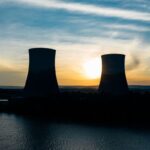
While much of the world rediscovers nuclear energy as a solution to climate and energy security challenges, Argentina faces a paradox. The country possesses 75 years of accumulated nuclear expertise, vast uranium reserves, and a complete fuel cycle infrastructure—yet until recently, this strategic asset languished in bureaucratic dysfunction and chronic underinvestment.
That’s changing. Fast.
In October, I led a delegation from We Are Innovation to visit Argentina’s RA-10 research reactor and the offices of Dioxitek. This state company converts uranium concentrate into nuclear fuel. What we found was not the typical narrative of state-owned enterprise decay. Instead, we encountered a sector undergoing radical transformation, driven by new leadership applying basic market principles to unlock capabilities that have existed for decades.
From “What the hell is Dioxitek?” to profitable operations
When Federico Ramos Napoli took over as Executive Manager of Dioxitek in 2024, he inherited what he describes as a company in chaos. “We achieved an absolute rebranding of the company. We went from being ‘what the hell is Dioxitek?’ in Congress to a company that today functions, reduces debt, and can show concrete results,” Ramos Napoli told El Cronista in a recent interview.
The turnaround story is instructive. Dioxitek, which supplies uranium dioxide to Argentina’s three nuclear power plants, was caught in a familiar trap: unclear governance, no organizational culture, mounting debts, and a business model that depended on Treasury transfers rather than viable commercial relationships. One out of every ten light bulbs in Argentina is powered by nuclear energy, yet the company responsible for keeping that system fueled was on the brink of collapse.
The new management’s approach was straightforward: settle historic debts (some dating back to 1999) with the National Atomic Energy Commission, renegotiate contracts with suppliers and clients in line with market standards, and run the Córdoba plant efficiently without waiting for government bailouts. The result? The company posted a positive balance of 4.8 billion pesos in the second quarter of 2025 and set production records, reaching 179,463 kilos of uranium dioxide powder—enough to nearly eliminate Argentina’s need to import this critical material.
Privatization as modernization
The transformation at Dioxitek is part of a broader reconfiguration of Argentina’s nuclear sector. On November 5, 2025, the Ministry of Economy formally launched the partial privatization of Nucleoeléctrica Argentina (NASA), which operates the country’s three nuclear power plants: Atucha I, Atucha II, and Embalse.
The government will sell 44 percent of NASA’s shares through an international public tender, while maintaining a 51 percent majority state ownership. An additional 5 percent will go to employees through a Participatory Property Program. The move is designed to inject private capital and management expertise while preserving state control over strategic decisions such as capacity expansion, new plant construction, and the addition of new shareholders.
Critics worry about the future of facilities like the Embalse nuclear plant in Córdoba, which underwent a major life-extension refurbishment in 2019 that added 30 years of operation and employs over 1,000 people directly. Yet the privatization framework maintains government veto power over key operational and strategic decisions—a model that seeks to balance efficiency gains with national security concerns.
Looking beyond Argentina’s borders
Perhaps the most intriguing development is Dioxitek’s pivot toward international markets. The company recently signed a memorandum of understanding with U.S.-based NANO Nuclear Energy to explore Argentina’s capacity to produce uranium hexafluoride (UF6)—the feedstock for uranium enrichment used worldwide in nuclear fuel.
“The future of the company is not in producing more or less tons of uranium dioxide, but in making the leap to produce UF6. That is the input before enrichment and the gateway to the global nuclear fuel market,” Ramos Napoli explained. This strategic shift recognizes a fundamental reality: if Argentina’s nuclear sector is designed only to serve three domestic plants, it will never generate the scale needed for efficiency and innovation. The path to viability runs through export markets.
Argentina possesses the raw materials, the conversion technology (developed by CNEA), and decades of operational experience. What it lacked was a business model that looked beyond captive domestic demand. The NANO Nuclear partnership—and the potential revival of the mothballed Formosa plant for UF6 production—could position Argentina as a significant player in global nuclear fuel supply chains at a moment when uranium hexafluoride demand is surging amid the atomic renaissance in developed economies.
The research reactor advantage
During our visit to the RA-10 multipurpose research reactor, currently under construction by CNEA, we saw another dimension of Argentina’s nuclear capabilities. This 30 MWth open-pool reactor, scheduled for commissioning in 2026, will serve multiple purposes: producing radioisotopes for nuclear medicine (including Molybdenum-99, Lutetium, and Iridium), performing neutron transmutation doping of silicon wafers for advanced electronics, and providing facilities for nuclear fuel element qualification and materials testing.
The RA-10 project represents the kind of infrastructure that can anchor an innovation ecosystem. The reactor will help Argentina respond to growing regional demand for medical radioisotopes while positioning the country as a regional leader in semiconductor doping technology—a niche but lucrative market for advanced electronics manufacturing.
The innovation opportunity
Argentina’s nuclear sector revival offers lessons that extend beyond energy policy. It demonstrates how applying market discipline and commercial logic to state enterprises can unlock latent capabilities without wholesale privatization. It shows the value of looking beyond domestic markets when those markets are too small to achieve efficiency. And it illustrates how 75 years of accumulated technical knowledge becomes an economic asset only when paired with viable business models.
The global context matters. As countries race to expand nuclear capacity to meet climate goals and energy security needs, supply chain bottlenecks are emerging in uranium conversion, enrichment, and fuel fabrication. Argentina enters this market with proven technology, operational experience, and available capacity—advantages that matter more now than they have in decades.
The test ahead is whether Argentina can sustain this momentum. The temptation in state enterprises is always to revert to political management, subsidized operations, and insulation from market signals. The early results from Dioxitek suggest a different path is possible: run these companies professionally, hold them to commercial standards, open them to partnerships and competition, and let them leverage Argentina’s genuine competitive advantages in nuclear technology.
If Argentina gets this right, the country could become a significant exporter in the nuclear fuel cycle—turning decades of accumulated knowledge into sustainable export revenue. That would be innovation in its truest sense: not inventing something entirely new, but finally putting existing capabilities to their highest and best use.
* Federico N. Fernández is a visionary leader dedicated to driving innovation and change. As the CEO of We Are Innovation, a global network of over 50 think tanks and NGOs, Federico champions innovative solutions worldwide. His expertise and passion for innovation have earned him recognition from prestigious publications such as The Economist, El País, Folha de São Paulo, and Newsweek. Federico has also delivered inspiring speeches and lectures across four continents, authored numerous scholarly articles, and co-edited several books on economics.
Source: We Are Innovation